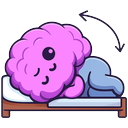
Vestibular exercises often bring on some dizziness. That is expected, and for some exercises it is the point. But a few simple precautions keep you safe.
Before you start
- Do the exercises your ENT, neurologist or vestibular physiotherapist recommended. If you are not sure which apply to you, or which ear is affected, ask first.
- Skip the repositioning maneuvers and ask a clinician first if you have neck or back problems. Skip the Semont maneuver if you have hip problems too.
- Ask your clinician before starting balance work after a recent fall.
- Have someone nearby the first time you try a maneuver, and every time you do the Semont maneuver.
Set up your space
- Use a bed with room to lie down on both sides, or to roll a full circle for the BBQ roll.
- For balance work, stand in a corner or next to a wall you can touch straight away. Never close your eyes without support in reach.
- Clear the floor if you will be walking.
During an exercise
- Mild dizziness is expected. Severe dizziness means stop and rest.
- Tap STOP at any time. The coach tells you to stay where you are and breathe. Do not jump up. When the spinning settles, sit up slowly and rest for a minute.
- Do the home exercises (Brandt-Daroff, habituation, gaze training) when you are not in the middle of a spin.
- If a step feels wrong, tap Back to repeat it or Next to skip it.
Get medical help straight away if
- you have a new, severe headache
- you have trouble speaking, or weakness or numbness in your face, arm or leg
- you have double vision or sudden hearing loss
- something feels seriously wrong
These can be signs of a problem that is not vestibular.
When to see your clinician
See your ENT, neurologist or vestibular physiotherapist if your spins keep coming back after repositioning, if the exercises make things worse, or if you are not improving after a few weeks of regular practice.
The exercises in VertigoMe are educational guides. They do not diagnose you or replace medical advice.